
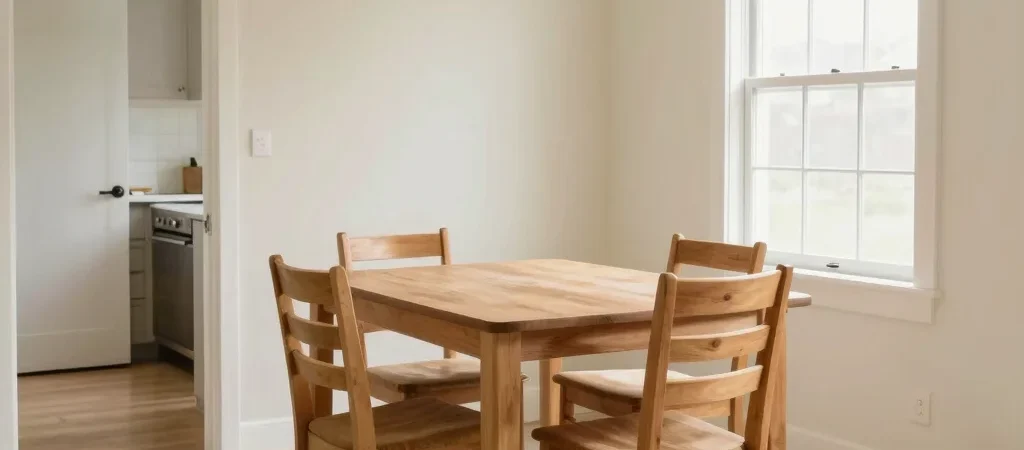
A dining table can look perfectly proportioned in a product photo and feel oversized once chairs are pulled out at home. Before settling on a shape or finish, plan for the movement around it as carefully as the tabletop itself.
Start with the traffic path
Measure the open area, then mark the table’s full footprint with paper or painter’s tape. Add the space needed for chairs to move in and out, and walk the route people use to reach the kitchen, a patio door, or another room.
Check nearby cabinets and drawers too. A table that leaves enough room for seated diners may still interfere with a cupboard door or turn a busy walkway into a squeeze.
Let the room guide shape
A rectangular table often follows a longer room’s lines, while a round table can make a compact dining nook feel less dominated by corners. Neither shape is automatically better; the useful test is whether it leaves a comfortable route through your particular room.
Consider how many people usually eat together, rather than choosing only for an occasional gathering. If you host now and then, an extendable design may be worth comparing, but check how much floor space it needs when opened.
Compare the full listing
Retailer dimensions may describe the tabletop without making the chair arrangement obvious. Check the table height, base or leg placement, extension details, and whether chairs are included; confirm measurements in the units you use at home.
Some retailer links in HouseSnugg guides may earn us a commission. Use your taped floor plan to compare listings, and choose the table that supports your regular meals without blocking the room’s everyday routes.

